Guess Where Each Dish Comes From
DishGuessr is a free food guesser and geography game. Look at a dish, guess its country of origin on an interactive world map, and see how well you know world cuisine — solo or with friends.
123 dishes to guess · 62 dish guides · 5 languages · free to play
How it works
DishGuessr takes seconds to learn. Here is the idea in three steps — for the full rules and scoring, read the how to play guide.
See the dish
A photo of a real dish appears, along with its main ingredients.
Guess the country
Click the interactive world map to place where you think it is from.
Score points
The closer your guess, the higher your score across five rounds.
Explore dishes by region
Find out where a dish is from: 62 in-depth guides across 62 countries. We add guides over time rather than publishing a thin entry for every dish in the game.
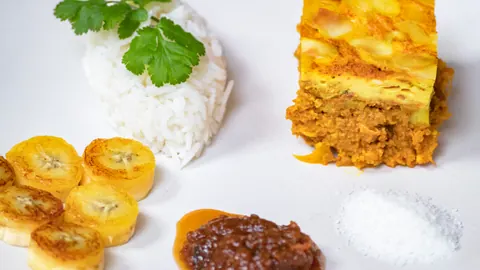
Africa (6)
- BobotieSouth Africa
- CouscousMorocco
- Doro WatEthiopia
- Ful MedamesSudan
- Jollof RiceNigeria
- KoshariEgypt
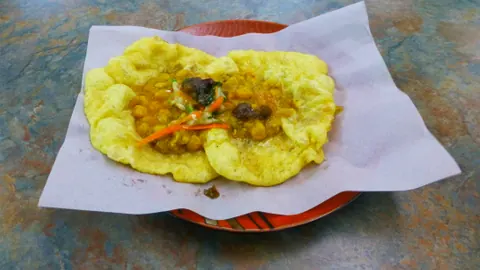
Americas (13)
- AsadoArgentina
- Bandeja PaisaColombia
- CevichePeru
- DoublesTrinidad and Tobago
- FeijoadaBrazil
- Gallo PintoCosta Rica
- HamburgerUnited States
- Jerk ChickenJamaica
- MofongoPuerto Rico
- PoutineCanada
- PupusaEl Salvador
- Ropa ViejaCuba
- TacosMexico
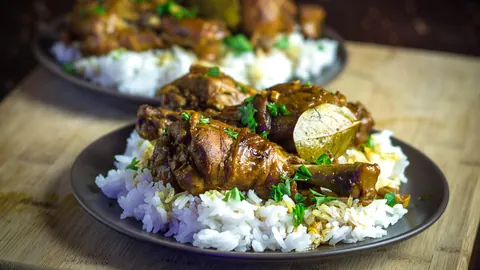
Asia (15)
- AdoboPhilippines
- Beef Noodle SoupTaiwan
- Butter ChickenIndia
- Dal BhatNepal
- Hainanese Chicken RiceSingapore
- KimchiSouth Korea
- LarbLaos
- MohingaMyanmar
- Nasi GorengIndonesia
- Nasi LemakMalaysia
- Pad ThaiThailand
- Peking DuckChina
- PhoVietnam
- PlovUzbekistan
- SushiJapan
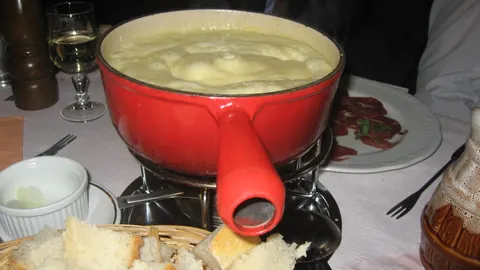
Europe (21)
- Bacalhau à BrásPortugal
- BorschtUkraine
- ĆevapiBosnia and Herzegovina
- Cheese FondueSwitzerland
- Coq au VinFrance
- Fish and ChipsUnited Kingdom
- GulyásHungary
- Irish stewIreland
- KarjalanpiirakkaFinland
- KöttbullarSweden
- Moules-fritesBelgium
- MoussakaGreece
- PaellaSpain
- PierogiPoland
- Pizza MargheritaItaly
- SarmaleRomania
- SauerbratenGermany
- SmørrebrødDenmark
- StamppotNetherlands
- Svíčková na smetaněCzechia
- Wiener SchnitzelAustria
Middle East (5)
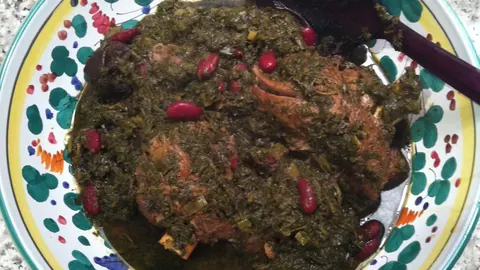
- Ghormeh SabziIran
- KibbehLebanon
- LahmacunTurkey
- MansafJordan
- ShakshukaIsrael
How to read a dish
Every dish carries clues to where it comes from. A few to watch for:
- Vinegar or fermentation → food preserved for a hot climate or a long winter, like Filipino adobo or Korean kimchi.
- Tomato, potato, maize or chilli → the dish is at most about 500 years old: these all came from the Americas.
- Dairy and dill → somewhere cold and northern.
- Fish sauce and lemongrass → Southeast Asia.
- Ingredients from far away → old trade routes: rice in Spanish paella, Italian pasta in Egyptian koshari.
Common questions
- Is DishGuessr free?
- Yes — it is completely free to play in your browser, with no download or sign-up required.
- Can I play with friends?
- Yes. Create a lobby and play in real time with up to eight players.
- How does scoring work?
- Each game has five rounds with up to five guesses each. The correct country on your first guess scores 5,000 points, near misses still score well, and each extra guess costs 500 points.
- How many dishes are there?
- 123 dishes to guess from 123 countries, and 62 in-depth guides on where they come from, with more added over time.
Challenge your friends
Create a private lobby, share the code, and see who really knows their world cuisine in real-time multiplayer for up to eight players.