Indonesian fried rice built on sweet soy sauce and shrimp paste, born from the practical habit of frying yesterday's rice.
Thrift with a distinct accent
Fried rice exists across Asia, and the technique arrived in the Indonesian archipelago through centuries of Chinese trade and settlement. Much of its appeal has always been thrift: frying yesterday's rice with aromatics turns a plain leftover into a full meal.
A word of caution on that leftover rice, since it is the one part of the tradition worth updating. Cooked rice can carry Bacillus cereus spores, which survive cooking and multiply if the rice sits at room temperature, producing a toxin that further frying does not reliably destroy. Rice intended for frying should be cooled quickly and refrigerated, and rice left out overnight should be thrown away rather than cooked again.
What makes the Indonesian version distinct is the seasoning. Kecap manis — a thick, sweet, palm-sugar soy sauce — gives the dish its dark colour and characteristic sweetness, while terasi, a pungent fermented shrimp paste, supplies the savoury depth underneath.
It is eaten at any hour, including breakfast, and is sold everywhere from street carts to hotel buffets. Malaysia, Singapore and Brunei have closely related versions.
Cold rice and high heat
Day-old refrigerated rice is essential. Freshly cooked rice carries too much moisture and turns to porridge in the pan; chilled grains have dried and firmed enough to separate and fry.
The aromatics are usually pounded into a paste — shallot, garlic, chilli and terasi — and fried until fragrant before the rice goes in. That step distinguishes it from simply stirring sauce through rice.
The pan must be very hot and not overloaded. Cooking in batches is the difference between fried rice and steamed rice with soy sauce on it.
The full plate
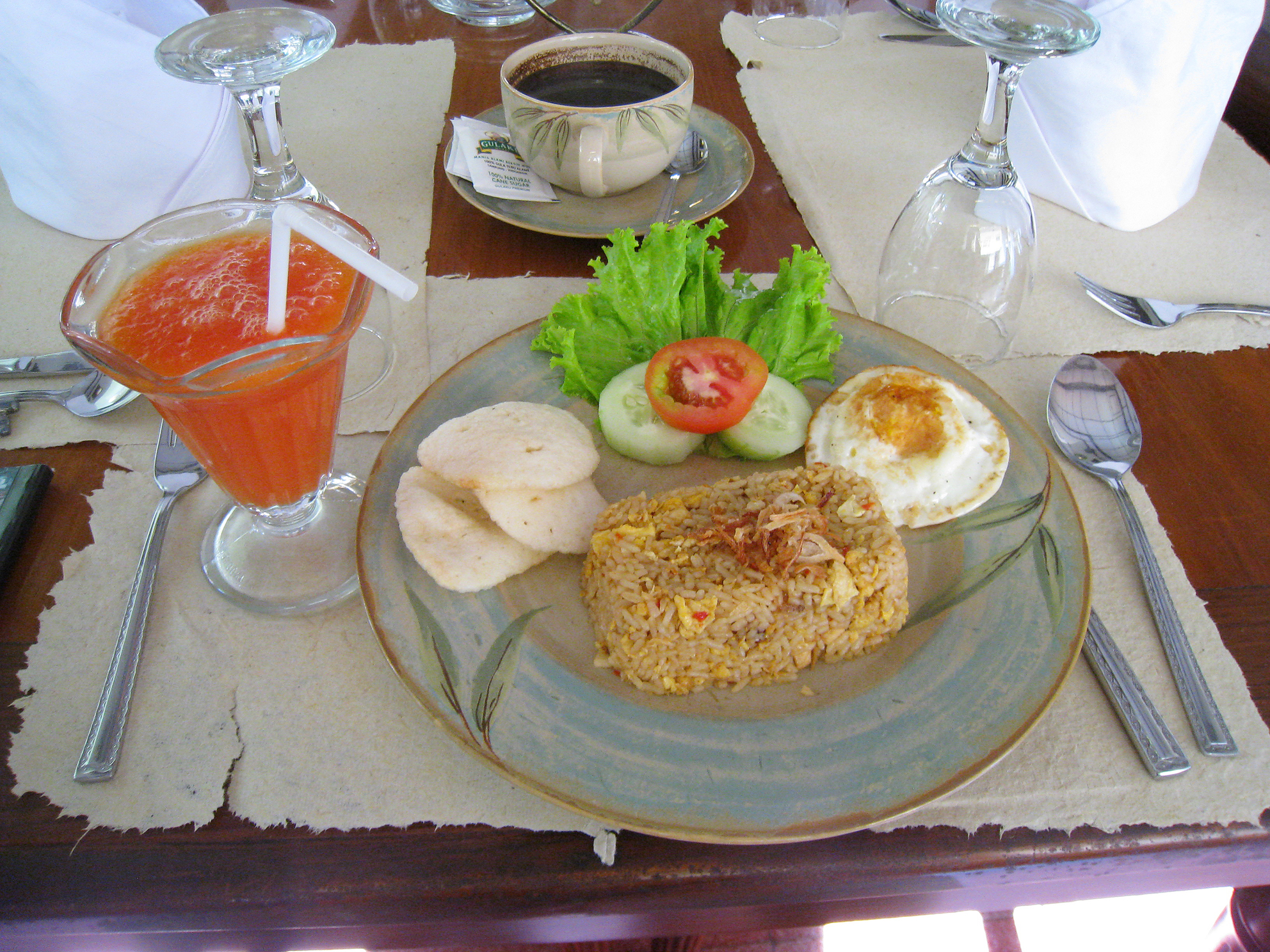
The classic presentation is topped with a fried egg with a runny yolk, which is broken and stirred through. Around it go prawn crackers, sliced cucumber and tomato, and often fried shallots.
Additions vary endlessly: chicken, prawns, sweet sausage, or the remains of last night's dinner. A satay skewer or two is a common restaurant flourish.
Sambal is served alongside rather than mixed in, because the base itself is sweet and mild and the heat is left to the eater.