Valencia's rice dish is a field lunch turned national emblem, and locals are famously particular about what does and does not belong in it.
Rice, water and the Albufera
Paella comes from the region around Valencia on Spain's eastern coast, where rice has been cultivated for centuries in the wetlands of the Albufera lagoon. Rice arrived in the Iberian Peninsula under Moorish rule, along with the irrigation knowledge that made large-scale cultivation possible, and the marshy land near the lagoon proved ideally suited to it.
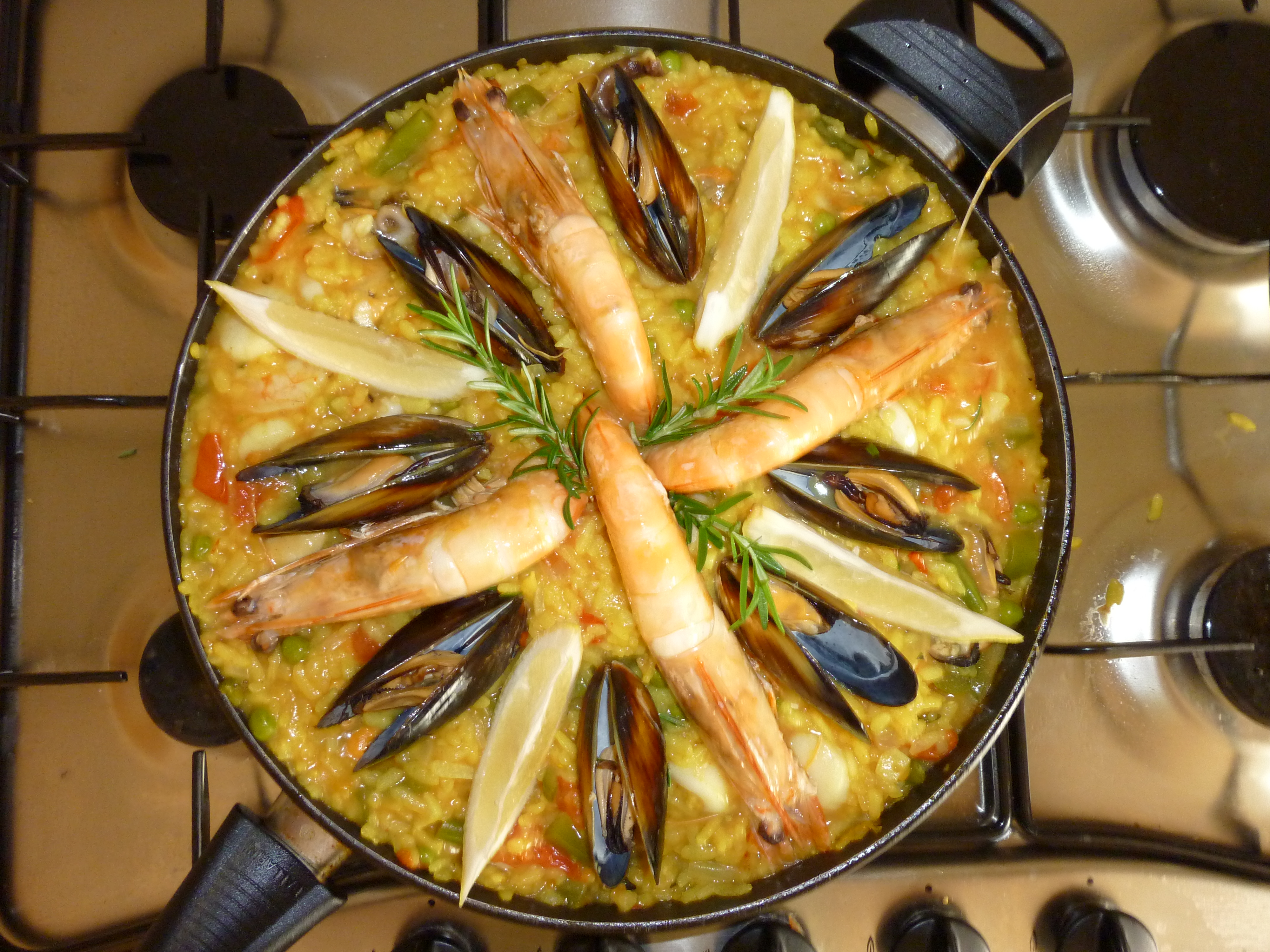
The name refers to the pan rather than the recipe. A paella is a wide, shallow, two-handled steel pan, and its shape is functional: it spreads the rice in a thin layer so the liquid evaporates quickly and every grain cooks in flavoured stock rather than steaming in a heap.
What belongs in a Valencian paella
The traditional country version is not a seafood dish. It is built from what farmers had to hand: chicken, rabbit, flat green beans, a large white bean, tomato, olive oil, saffron and sometimes snails or a sprig of rosemary. It was cooked outdoors over an open fire of orange or vine wood, eaten straight from the pan at midday.
Coastal communities naturally made versions with seafood, and mixed land-and-sea paellas exist too. But the Valencian insistence on the traditional recipe is genuine and strongly felt, and adding chorizo in particular is a reliable way to provoke a heated response from anyone with roots in the region.
The socarrat and the technique
The prize in a well-made paella is the socarrat: the thin layer of rice that toasts against the base of the pan into something caramelised and slightly crisp. It is achieved by raising the heat briefly at the end and listening for the change in sound as the last liquid cooks away.
Two rules govern the cooking. The rice is spread evenly and then left alone — stirring releases starch and turns the dish into risotto, which is precisely what a paella should not be. And the rice must rest off the heat for a few minutes before serving.
The dish is communal by nature. Traditionally it is eaten from the shared pan with wooden spoons, each person working the wedge in front of them, which explains the pan's width far better than any cookbook instruction.