Korea's fermented vegetable staple is less a single recipe than a preservation tradition with hundreds of regional and seasonal variations.
Preserving the winter
Kimchi began as a solution to a climate problem. Korean winters are long and cold, fresh vegetables were unavailable for months, and salting and fermenting the autumn harvest was the way to eat greens until spring.
The familiar red kimchi is more recent than many assume. Chilli peppers reached Korea only after they had crossed from the Americas, some centuries ago, and earlier kimchi was a white, brined preparation without any heat. White kimchi is still made and valued, and is often the version served to children or alongside delicate dishes.
The communal autumn preparation, in which families and neighbours make enough kimchi to last the winter in a single day of collective work, remains a significant social tradition and has been recognised internationally as cultural heritage.
How it is made
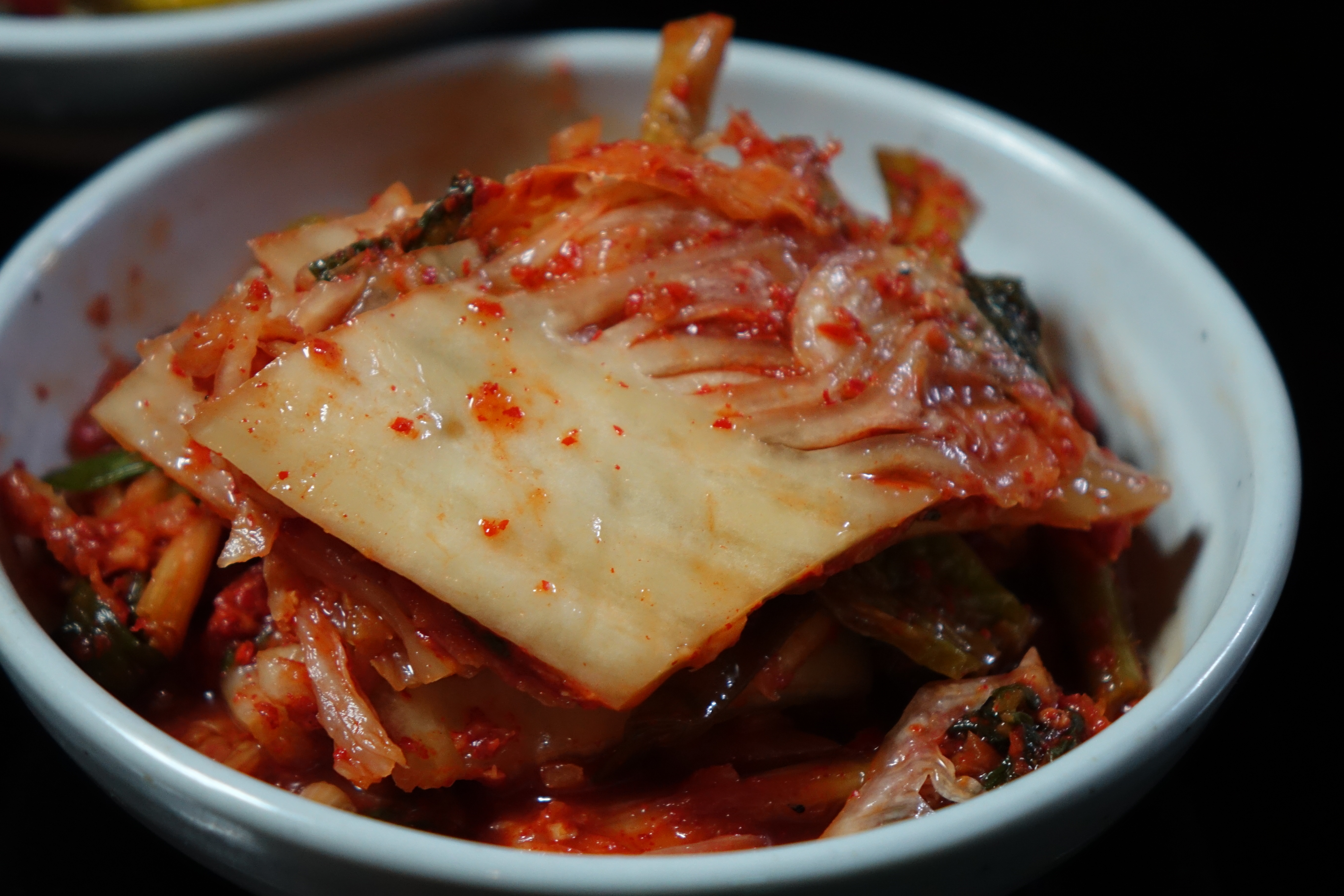
The best-known version uses napa cabbage. The leaves are salted for several hours to draw out water and season them, then rinsed and coated with a paste of chilli powder, garlic, ginger, spring onion and a savoury element such as fermented seafood, which supplies depth and helps drive fermentation.
The packed cabbage is left at room temperature to begin fermenting, then moved somewhere cold to continue slowly. Traditionally it was stored in earthenware jars buried in the ground, which held a stable cool temperature through winter; many Korean households now own a refrigerator designed specifically to reproduce those conditions.
Radish, cucumber, spring onion and many other vegetables are treated the same way, and each region has its own emphasis — saltier and more heavily fermented in the south, lighter and cleaner in the north.
Eating it at every stage
Kimchi appears at nearly every Korean meal as one of the small side dishes that accompany rice, and its flavour changes continuously as it ages. Fresh kimchi is crisp and bright; after weeks it turns sour, soft and pungent.
Older kimchi is not a failure but a different ingredient. It is precisely what is wanted for kimchi stew, kimchi fried rice and savoury pancakes, where its acidity and depth do work that fresh kimchi cannot. Cooks therefore keep batches of different ages, choosing the right one for the job.