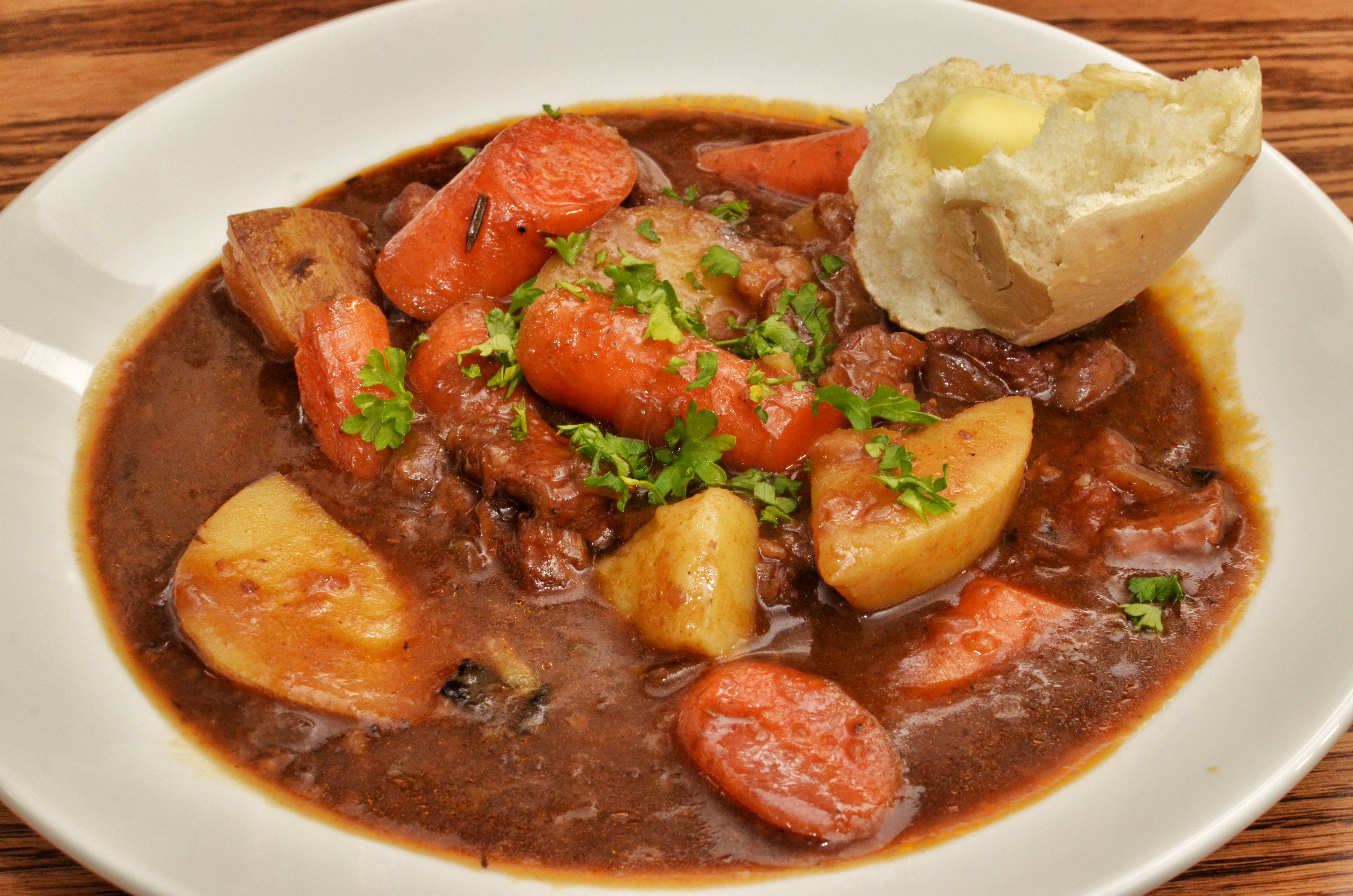
A plain, slow-simmered stew of mutton, potato and onion, and the subject of a persistent argument about whether carrots belong in it.
Poverty food, honestly
Irish stew comes from a genuinely poor rural tradition, and its original ingredient list is short because that is all there was: mutton or kid from older animals, potatoes, onions, water and salt. It was cooked in a single pot over a fire for hours.
The potato's central role reflects its dominance in the Irish diet before the mid-nineteenth century, when reliance on a single crop turned catastrophic during the Great Famine. The stew survived that history as a national dish.
Mutton rather than lamb is the traditional meat. Older sheep were kept for wool and milk and eaten only at the end of their working lives, and their tougher, stronger-flavoured meat is what the long simmering was designed for.
The carrot question
Purists hold that authentic Irish stew contains meat, potato, onion and nothing else — that carrots, barley, stock and herbs are later embellishments that dilute a dish defined by its austerity.
In practice most Irish households add some of them, and carrots in particular are near-universal in modern versions. The argument is real but conducted with good humour, and both camps agree that the dish should be simple.
The one point of genuine consensus is the potato's dual role. Some are cut large and stay whole; others are sliced thin deliberately so they disintegrate and thicken the liquid. No flour or other thickener is used.
Cooking and serving
The stew is layered rather than stirred — meat, then onion, then potato — and simmered very gently for two or three hours. Vigorous boiling toughens the meat and breaks everything into mush.
The finished result should be neither soup nor a thick casserole, but somewhere between: a broth lightly thickened by dissolved potato, with meat that falls apart under a spoon.
It is served with soda bread and often nothing else, and like most stews it is generally agreed to be better the next day.