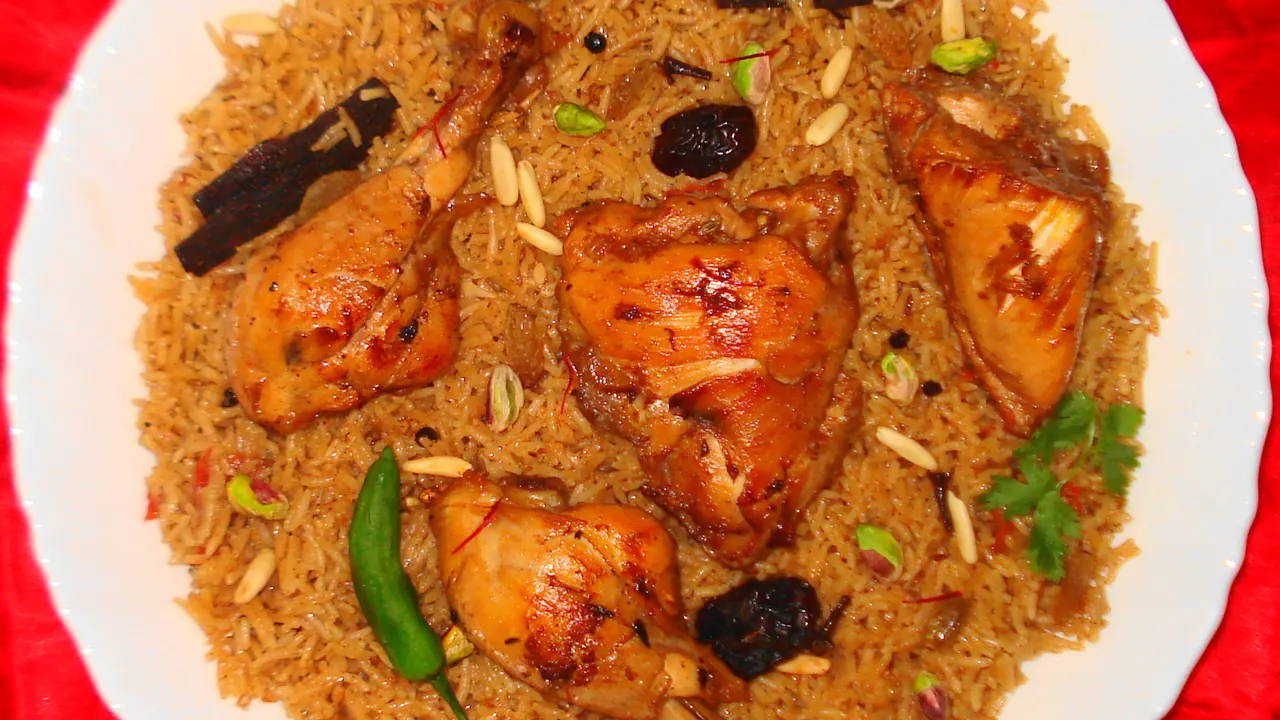
Long-grain rice cooked in a spiced chicken or lamb broth and served under the meat on a shared platter — the everyday centrepiece of Saudi and Gulf tables.
One pot, one broth
Kabsa starts with meat — usually chicken or lamb, occasionally camel — browned with onion and tomato and then simmered with a warm spice mixture. Cardamom, cinnamon, cloves, black pepper and bay leaves are typical, and dried black lime, known as loomi, adds a distinctive sour, faintly smoky note.
Long-grain rice is then cooked in that broth, so every grain absorbs the flavour of the meat and spices. In many versions the meat is lifted out once tender and roasted or grilled separately to crisp the outside before it is returned to the top of the rice.
The finished dish is scattered with toasted almonds, raisins or fried onion and served with a sharp, spicy tomato sauce known as daqqus and a simple salad of cucumber and tomato.
The shared platter
Kabsa is widely regarded as the national dish of Saudi Arabia, and it is eaten across the Arabian Peninsula. It is cooked at home several times a week, served at weddings and religious holidays, and prepared in vast quantities when guests are expected.
Traditionally it is presented on a single large tray, a mound of rice with the meat placed on top, around which everyone gathers. Eating from the common platter, customarily with the right hand, is part of the hospitality the dish represents.
Telling it apart from its neighbours
Spiced rice with meat is a regional staple, and names change at the borders. Machboos, eaten in Kuwait, Bahrain, Qatar and the United Arab Emirates, is very close to kabsa. Yemen's mandi is different: the meat is cooked slowly in an underground or clay oven and the rice picks up a smoky flavour. Further east, biryani layers rice and meat and leans on a different spice profile.
In the game, a guess anywhere on the Arabian Peninsula will land close to this dish. Saudi Arabia, the largest country there, is its classic home.