Shank meat simmered for hours into a thick, spiced stew and eaten at breakfast — a dish born in Mughal-era Delhi that became a pillar of Pakistani food.
Slow-cooked overnight
The name is usually traced to the Arabic word nahar, meaning day or morning, because nihari was eaten early, after the dawn prayer. To be ready at that hour it had to cook through the night.
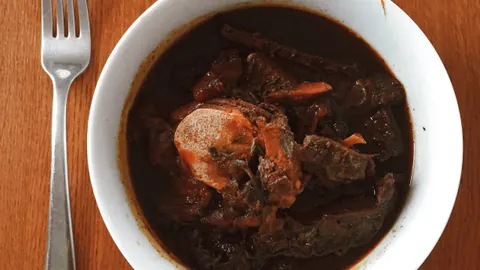
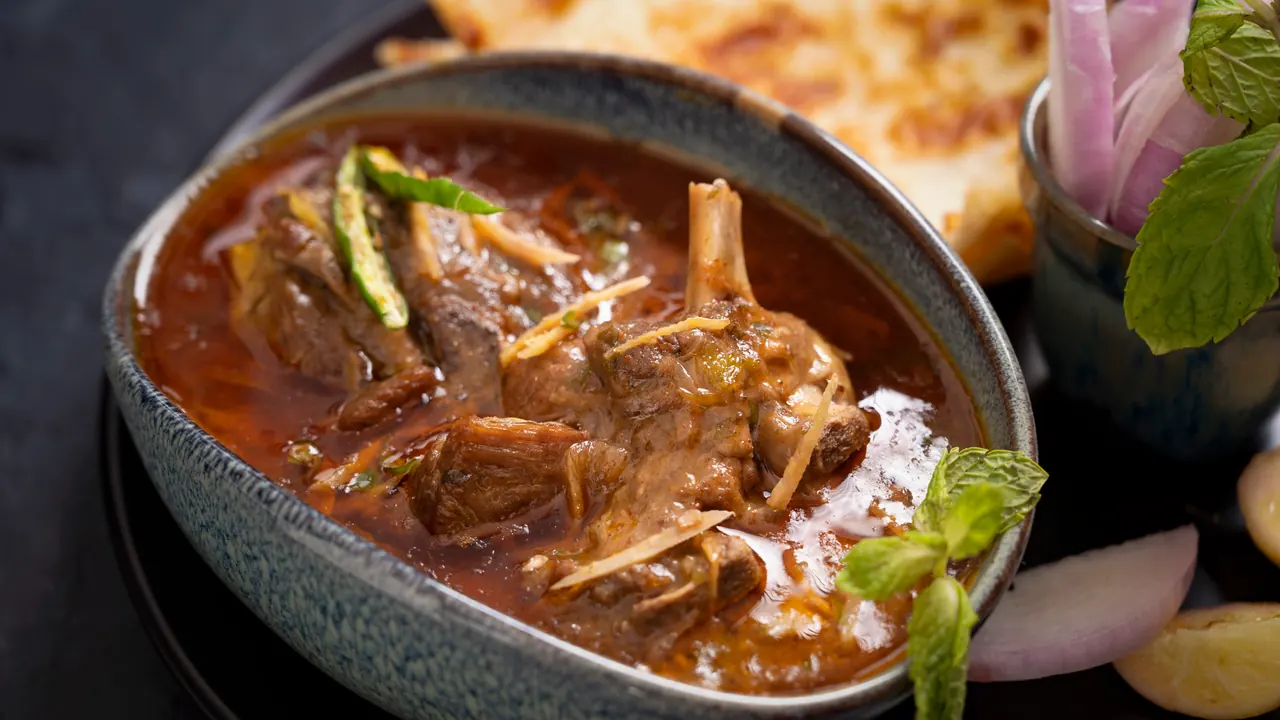
The meat is beef or lamb shank, with its bones and marrow, simmered for many hours with a spice blend that typically includes fennel, ginger, garlic, cardamom, cloves, black pepper and long pepper, and red chilli for heat. Towards the end, a little wheat flour is stirred in to thicken the liquid into a silky gravy with a layer of spiced fat on top.
It is served with fresh julienned ginger, sliced green chilli, coriander leaves, fried onion and a squeeze of lemon, and eaten with naan. Many places offer extras: bone marrow, known as nalli, or brain, known as maghaz, added to the bowl.
From Delhi to Karachi
Nihari is generally traced to Old Delhi in the late Mughal period, when slow-cooked meat dishes were made for the nobility and for working people needing a filling start to the day. Lucknow also has a strong tradition of the dish.
After the partition of British India in 1947, many families from Delhi moved to Karachi and brought nihari with them. It became one of the city's signature foods, and today it is eaten throughout Pakistan, with famous nihari houses in Karachi and Lahore, as well as in India and Bangladesh.
Telling it apart from its neighbours
South Asian kitchens have several long-cooked meat breakfasts. Paya is made with trotters, and haleem combines meat with wheat and lentils, cooked until it can be stirred into a thick, smooth porridge. Nihari is the one with a glossy, flour-thickened gravy and whole pieces of shank.
Because it began in Delhi, a guess in northern India will land very close in the game, but the dish is most strongly associated with Pakistan today.