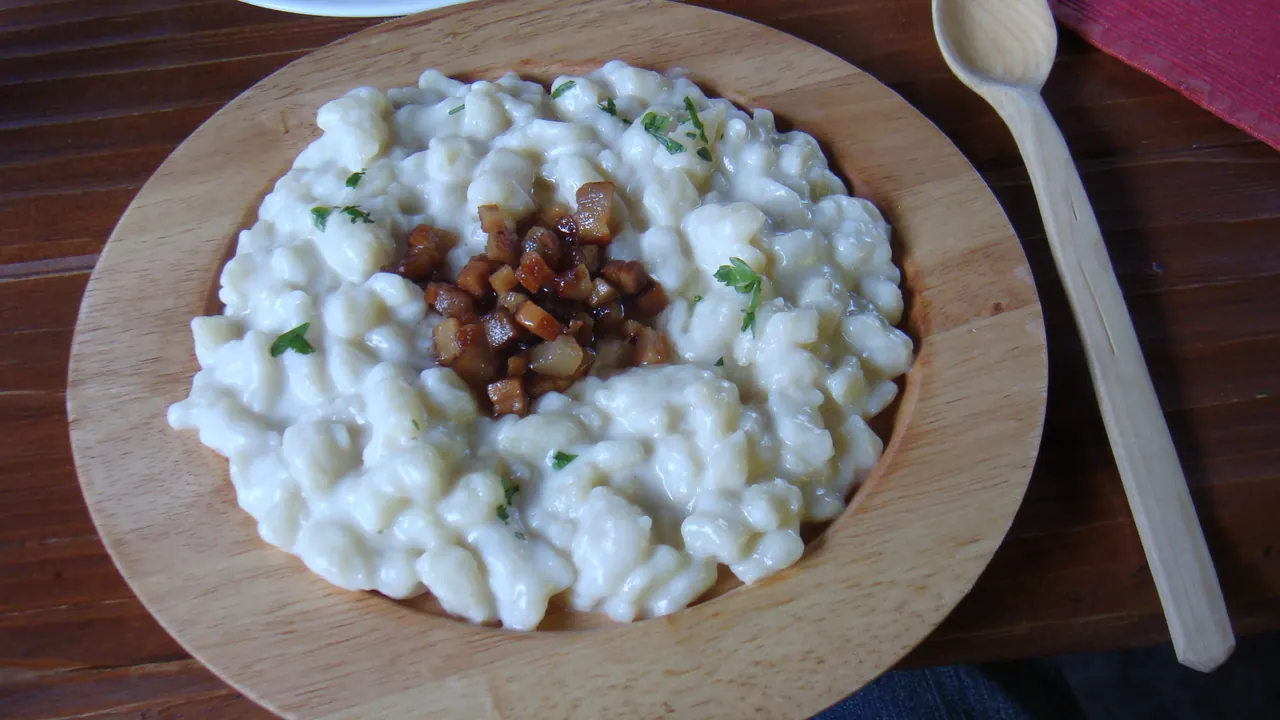
Small potato dumplings tossed with tangy, spreadable sheep's cheese and topped with crisp bacon — the national dish of Slovakia and the food of its mountain shepherds.
Dumplings and bryndza
Halušky are small, irregular dumplings made from a soft dough of finely grated raw potato, flour and salt. Rather than being shaped by hand, the dough is pushed through the holes of a perforated board or a special grater straight into a pot of boiling salted water, where the pieces cook in a few minutes.
Bryndza is a soft, crumbly sheep's-milk cheese with a sharp, salty, slightly sour taste. Mixed into the hot dumplings, it melts into a creamy coating. The dish is finished with diced bacon fried until crisp, with a little of its fat poured over, and sometimes chopped chives.
Slovak bryndza is protected under the European Union's system of geographical indications, so the name can only be used for cheese made by the traditional method in Slovakia.
Food of the salaš
The dish comes from the mountainous centre and north of the country, where sheep farming has a long history. Its natural home is the salaš, a shepherd's hut or mountain farm where cheese is made, and many of these now operate as rustic restaurants serving bryndzové halušky to hikers and families.
The traditional drink with it is žinčica, the tangy whey left over from cheese-making. A close relative, strapačky, uses sauerkraut instead of bryndza, and Slovak villages hold contests in cooking, and eating, bryndzové halušky.
Telling it apart from its neighbours
Small boiled dumplings are common across Central Europe: Hungarian nokedli, served with paprika stews, and German and Austrian Spätzle are both made from a flour-and-egg batter. The grated potato in the dough and the sheep's cheese on top are what make the Slovak version.
Sheep's cheese traditions continue across the Tatra mountains into southern Poland, so in the game a guess there or in Czechia lands close. Slovakia itself sits just to the south of the Tatras.