Baked, slightly sweet pastries filled with a juicy, spiced stew — Bolivia's mid-morning snack, eaten upright and with care so as not to spill a drop.
Juicy by design
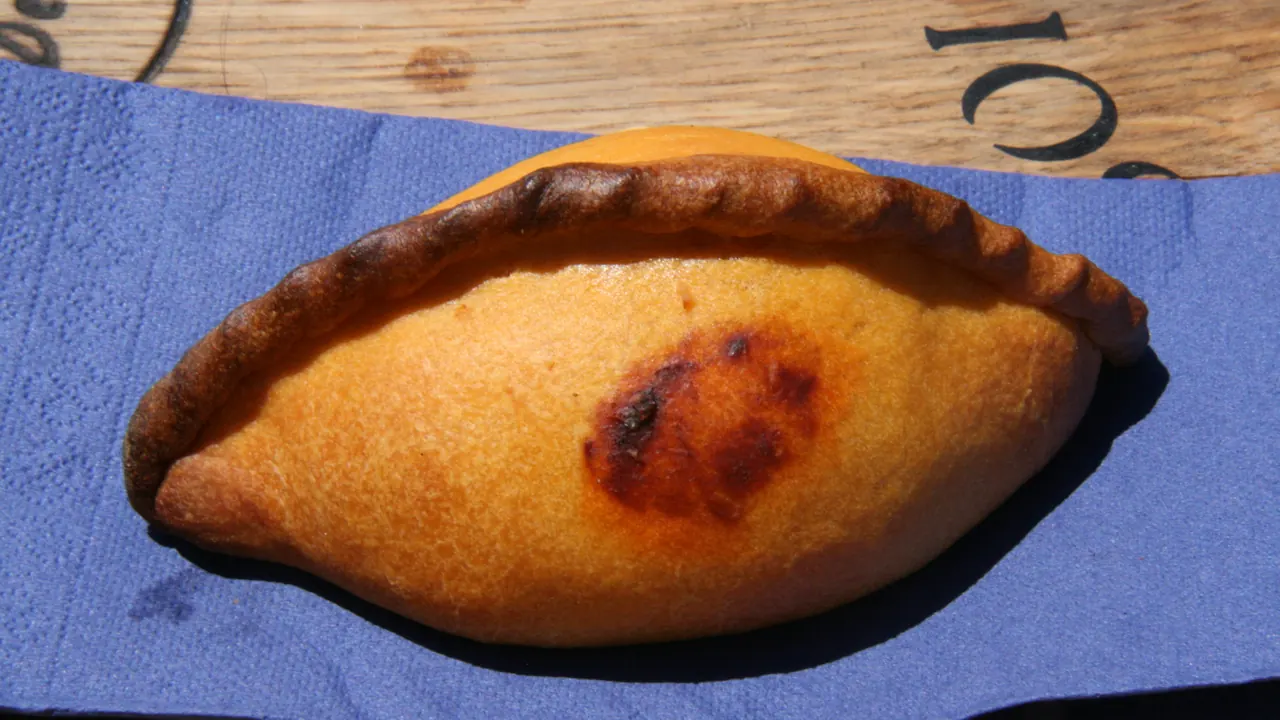
A salteña looks like a large empanada, with a pastry that is lightly sweet and often brushed to a golden-orange colour, and a thick, braided seam running along the top instead of around the side.
The difference is inside. The filling is a spiced stew of beef or chicken with diced potato, peas, olives, raisins and hard-boiled egg, seasoned with ají chilli and a little sugar. Gelatin is added so that the stew sets firm enough to spoon into the dough; in the oven it melts back into a rich broth, sealed inside the pastry.
Eating one is a skill. You hold it upright, bite off a corner, sip some of the juice and then work your way down, ideally without dripping. Spilling is part of the folklore of the dish, and many people eat theirs with a spoon.
A name from across the border
The name points to Salta, a city and province in northern Argentina. The most popular story credits Juana Manuela Gorriti, a nineteenth-century writer from Salta who lived in exile in Bolivia, with popularising the pastry there, though the details are hard to confirm.
Salteñas are a morning food. Specialised shops, salteñerías, sell them from early in the day and often run out by around noon, and they are a standard mid-morning snack across the country, with cities such as La Paz, Cochabamba and Potosí each proud of their own style.
Telling it apart from its neighbours
Baked or fried filled pastries are made all over South America, from the empanadas of Argentina and Chile to the pastéis of Brazil. The salteña stands out for its sweet dough and its soupy, sweet-and-spicy filling.
In the game, the name is a trap: it suggests Argentina, and a guess there will land close, but the pastry as it is known today is Bolivian through and through.